Wildlife & Conservation
Snow Leopards in Nepal: The Ghost of the Himalayas and the Fight to Protect It
Himal Shahi Thakuri · Oct 26, 2026 · 24 min read
Few animals in the world are as hard to see as the snow leopard. It lives above the tree line, in steep and rocky country where the air is thin and the winters are brutal. It moves mostly at dawn and dusk, and its coat blends so well with grey stone and snow that even experienced trackers can scan a hillside for hours and miss it. Local people and conservationists have long called it the ghost of the mountains, and the name fits.
Nepal sits at the heart of this story. The country is small, and only a sliver of the world’s snow leopard habitat lies inside its borders, yet it is home to a meaningful share of the species. In 2025, Nepal released its first nationwide population estimate, based on a decade of camera traps and genetic sampling. The result was a number that surprised many people: around 400 animals, and a population that looks relatively stable. That is good news, but it comes with serious warnings about herders, climate change, poaching and development.
This article walks through what we know about snow leopards in Nepal today. It covers the animal itself, how scientists counted it, where it lives, what it eats, how it lives alongside mountain communities, what threatens it, what conservationists are doing about it, and how travellers can try to see one responsibly. Wherever possible, the figures come from recent surveys and reporting, and a list of sources appears at the end.
A Cat Built for the Roof of the World
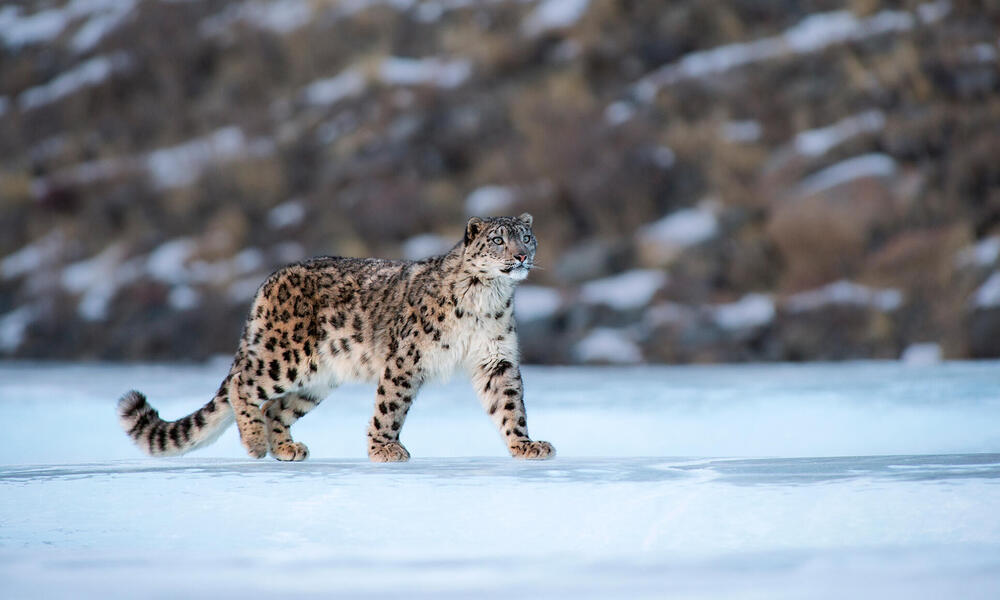
The snow leopard, known scientifically as Panthera uncia, is one of the great cats, but it does not behave like most of its relatives. It is a medium-sized cat, much lighter than a tiger or a lion, with adults typically weighing somewhere between about 25 and 55 kilograms. What it lacks in bulk it makes up for in specialised design. Its fur is thick and dense, grey-white with dark rosettes and spots, which gives it superb camouflage on broken rock. Its body is compact and muscular, with powerful hind legs that let it make long, controlled leaps across ravines and ledges.
Its tail is one of its most distinctive features. It is long, thick and heavily furred, and it works as a balancing pole on steep ground. In the cold, a snow leopard can wrap that tail around its body or face like a scarf. The large, broad paws spread its weight on snow and act a bit like natural snowshoes. These adaptations explain how a predator can patrol slopes where a misstep means a long fall.
Snow leopards also differ from other big cats in ways that surprise people. They do not roar the way lions and tigers do. Instead they communicate with softer sounds, along with scent marks, scrapes and scratches left along ridgelines and trails. Those signs are what researchers often rely on, because the animals themselves are so seldom seen.
That secretive behaviour has a scientific consequence. Snow leopards are widely described as the least studied of the big cats. They live at low densities, across remote and rugged terrain that is difficult and dangerous to survey. For decades, even basic questions about how many there are and where they roam had only rough answers. Nepal’s recent work is part of a global effort to replace those guesses with solid data.
Globally, the species is listed by the International Union for Conservation of Nature as vulnerable to extinction, and the exact world population is unknown. The Snow Leopard Trust, a US-based conservation group, has said there may be as few as 3,920 and probably no more than 6,390 snow leopards across the 12 Asian countries where they live. Those numbers are small, and they are uncertain, which is part of why every national survey matters.
Why Nepal Matters
On a map of the snow leopard’s range, Nepal is easy to overlook. The animal’s habitat sweeps across the high mountains of Central and South Asia, including Afghanistan, Bhutan, China, India, Kazakhstan, Kyrgyzstan, Mongolia, Pakistan, Russia, Tajikistan and Uzbekistan, along with Nepal. China holds the largest share by far. Nepal’s slice is tiny by comparison.
And yet the numbers tell a different story about its importance. Conservation groups say that Nepal holds only about two percent of the world’s snow leopard habitat, but is home to around ten percent of the estimated global population. Other assessments put the share slightly lower, at roughly seven to eight percent of the population on about one and a half percent of the range. Either way, the pattern is the same. Nepal punches above its weight. WWF Nepal has pointed out that the country has the second smallest area of snow leopard habitat after Bhutan, yet the fourth largest population.
That matters for several reasons. First, it means that protecting snow leopards in Nepal can make a real difference for the species as a whole. Second, it suggests that Nepal’s high valleys offer good habitat, with enough prey and enough cover to support healthy numbers. Third, it makes Nepal a useful case study. The country has pioneered methods that other nations are now borrowing, including community-run conservation committees, livestock insurance, DNA analysis of scat, camera trapping at scale and satellite collaring.
Nepal also has a cultural advantage. Many mountain communities regard the snow leopard as a sacred being, sometimes described as a mountain deity or a guardian of the high pastures. Conservationists say these beliefs help the animal survive, because they give people a reason to tolerate it even when it costs them. That does not remove the conflict between herders and big cats, as we will see, but it shapes the way people respond to it.
How Nepal Finally Counted Its Snow Leopards
For most of the last few decades, Nepal’s snow leopard figures were educated guesses. Surveys looked for signs, such as tracks, scrapes, droppings and scent marks, and combined them with habitat models to estimate how many animals the landscape could support. Older estimates put the national population somewhere between 301 and 400, and some conservation reports have used ranges like 350 to 500. These were useful for planning, but they were not hard counts, and they could not say whether numbers were rising or falling.
That changed with the national snow leopard population assessment released in April 2025. Led by Nepal’s Department of National Parks and Wildlife Conservation, with support from the Department of Forests and Soil Conservation, the National Trust for Nature Conservation, WWF Nepal and other researchers, the study followed international guidelines known as the Population Assessment of the World’s Snow Leopards. Those guidelines aim to make estimates consistent and comparable across countries.
The fieldwork was extensive. Data were gathered between 2015 and 2024 across several regions of the Nepalese Himalaya. The areas included Api Nampa Conservation Area, Shey Phoksundo National Park, Annapurna Conservation Area, Manaslu Conservation Area, Langtang National Park, Gaurishankar Conservation Area and Kangchenjunga Conservation Area. Two important areas outside formal protection were also surveyed, the Humla-Limi valley and eastern Dolpo.
The methods were modern. Teams placed camera traps along trails and ridgelines, and each snow leopard that walked past could be identified by its unique spot pattern, much like a fingerprint. Researchers also collected scat samples and analysed the DNA to identify individual animals. By combining those records with statistical models, they could estimate not just how many animals were photographed, but how many likely lived in each area.
The headline result was an estimated 397 snow leopards in Nepal, with a confidence interval running from about 331 to about 476. The average density was around 1.56 animals per 100 square kilometres. The highest densities were recorded in Shey Phoksundo National Park and the Manaslu Conservation Area. The Western landscape, which covers the northwest of the country, was found to hold roughly 60 percent of Nepal’s snow leopards.
One striking finding came from Humla, a remote district in the west. A camera study there, started in 2022 by researcher Rinzin Phunjok Lama and colleagues, used 61 cameras and recorded 39 individual snow leopards. It was the first extensive study of its kind outside protected areas, and the number was higher than expected. It also helped local residents realise how valuable their landscape is for wildlife, which in turn encouraged interest in protecting it.
Officials described the assessment as a historic step for conservation. That is fair. A solid baseline means that future surveys can show real trends, and that managers can judge whether their efforts are working. It is also worth being honest about uncertainty. The confidence interval is wide, estimates in difficult terrain always carry error, and a stable population does not mean a safe one.
Where Snow Leopards Live in Nepal
Snow leopards in Nepal live along the northern edge of the country, in the trans-Himalayan zone near the border with Tibet. They are generally found at high elevations, often between roughly 3,000 and 5,000 metres, in a mosaic of alpine meadows, rocky slopes, cliffs and scree. Older reporting describes their typical range as between about 4,000 and 4,900 metres, and they tend to follow their prey up and down the mountains with the seasons, sometimes descending in winter when snow pushes wild herds lower.
Researchers have divided the snow leopard range in Nepal into several landscapes. The Western landscape is the stronghold. It includes Shey Phoksundo National Park in Dolpo, the Humla and Mugu regions, and the high country of Api Nampa. The Central landscape covers areas such as Annapurna, Manang, Mustang, Manaslu and Langtang. The Eastern landscape includes Kangchenjunga and neighbouring areas, where numbers are smaller. One report from the Eastern Himalaya noted around 39 individuals there in earlier estimates, which shows how thin the population becomes at the edge of the range.
Several of these places are internationally famous for other reasons. Shey Phoksundo, in Upper Dolpo, is a vast, remote and culturally Tibetan region known for its turquoise lake and ancient monasteries. Annapurna and Manaslu are among the most popular trekking regions in the country. Kangchenjunga, on the border with India, sits at the foot of the third highest mountain on Earth. That overlap between wildlife habitat and human travel routes is both an opportunity and a risk, because it can bring income to local communities but also disturbance to the animals.
Protected areas matter a great deal here. Seven of the surveyed regions are national parks or conservation areas, and many are managed with local communities rather than in spite of them. Nepal’s conservation area model gives local committees a role in management and a share of tourism revenue. That approach has been central to the way snow leopard conservation works in practice.
Snow leopards also cross borders. Their territories do not respect national boundaries, and an animal photographed in Nepal may spend part of its life in Tibet or India. This is why researchers emphasise regional cooperation, shared monitoring and landscape-scale planning. Nepal is part of the Global Snow Leopard and Ecosystem Protection Program, a partnership of range countries that coordinates conservation priorities.
What a Snow Leopard Eats
To understand why snow leopards live where they do, you have to look at what they eat. Their main prey in Nepal is the blue sheep, also called bharal, a sturdy mountain ungulate that grazes in herds on steep alpine pastures. Blue sheep are well suited to the same terrain as the cats, which is why the two species so often overlap. The snow leopard also hunts Himalayan tahr, musk deer, serow and smaller animals. Research from Stanford University has pointed out that pikas, small relatives of rabbits, can also make up a significant part of the diet in some areas.
A snow leopard is an ambush predator. It uses cover, slopes and the camouflage of its coat to get close, then makes a short, explosive rush, often downhill. It can kill animals larger than itself, and a single large kill can feed a cat for several days. Because of this, a healthy snow leopard population generally signals a healthy mountain ecosystem with enough wild prey.
This has earned the snow leopard a reputation as an umbrella species. Protecting it means protecting the grasslands, cliffs and water sources that support everything else. Conservationists in Nepal argue that where snow leopards persist, prey populations such as blue sheep, tahr and musk deer tend to remain healthy, and that the predators help regulate those herds. The snow leopard is therefore not just a symbol. It is an indicator of whether the high-altitude ecosystem is functioning.
The food web also explains one of the most difficult problems in the region. Wild prey in many areas has declined because of overgrazing by domestic animals, habitat disturbance and hunting. Meanwhile, livestock numbers are high. In much of snow leopard country in Nepal, domestic animals now vastly outnumber wild ungulates. That sets the stage for conflict.
Living Alongside Herders
Most of the people who share the snow leopard’s mountains are herders, farmers and traders. They keep yaks, cattle, sheep, goats and horses, often moving them between seasonal pastures. Their animals are their savings, their food, their transport and their status. A major loss can be devastating.
Snow leopards sometimes kill livestock, and when they do, the consequences can be dramatic. In one reported incident in Langtang Valley, a single snow leopard killed around 100 sheep and goats in one attack, probably because the animals were penned in and panicked. These surplus killing events are rare, but they are remembered, and they fuel resentment. When wild prey is scarce, the likelihood of livestock attacks goes up, and herders sometimes respond by killing the cat.
It is important to keep the scale in perspective. A study of nine settlements in the Annapurna and Manaslu Conservation Areas and Sagarmatha National Park found that snow leopards were blamed for roughly 1.5 to 14.3 percent of livestock losses, depending on location. Wolves and lynx accounted for much smaller shares. Livestock deaths from disease, harsh weather and natural disasters were higher than deaths from predators. The same study found that conflict was lower than it had been in 1990, and that about half of respondents had changed their minds in favour of conservation. But it also found that around 15 percent of respondents opposed protecting snow leopards and considered retaliatory killing the best solution.
Those findings reflect a real tension. Many herders accept the snow leopard as part of their landscape. Others feel that the burden of conservation falls unfairly on them, because they pay the cost while the benefits go to national governments or international donors. Any lasting solution must address that imbalance.
Researchers have identified several tools for reducing conflict. Predator-proof corrals protect animals at night. Guard dogs and improved herding practices reduce risk. Better veterinary care reduces losses from disease, which can offset predator losses. And compensation or insurance schemes reduce the financial shock when an animal is killed. In surveys, community-based insurance and better animal husbandry were the most popular measures across study regions.
A researcher working in Nepal’s Trans-Himalaya, Rinzin Phunjok Lama, has also noted that simply increasing wild prey does not guarantee that snow leopards will leave livestock alone. That means conflict reduction cannot depend on prey recovery alone. It has to combine ecological work with direct support for the people who live there, including alternative livelihoods that do not put them in constant tension with wildlife.
Climate Change and a Shrinking Mountain Home
Of all the threats facing snow leopards, climate change may be the hardest to manage, because it is largely outside the control of local conservationists. Snow leopards depend on a narrow band of habitat above the tree line and below the permanent ice. As temperatures rise, forests and shrubs creep upward, and the alpine zone gets squeezed. There is nowhere further up to go.
A study published in 2012 by Jessica Forrest and colleagues estimated that the loss of alpine habitat could reduce snow leopard habitat in Nepal by as much as 40 percent under high-emission scenarios. That figure is often cited by Nepali conservation organisations and by the Snow Leopard Ecosystem Management Plan. It is a projection, not a measurement, but it shows how serious the risk could be.
Prey is part of the problem. A modelling study led by Achyut Aryal and colleagues looked at both snow leopards and blue sheep under future climate conditions. It found that under current conditions, roughly 11.6 percent of Nepal, about 17,190 square kilometres, is climatically suitable for the snow leopard. When the distribution of blue sheep is added to the model, the suitable area falls to about 5,435 square kilometres, a drop of roughly 24 percent. The researchers also predicted a growing mismatch between where snow leopards and blue sheep can live, which could make hunting harder and push cats toward livestock.
Climate change may also bring new competitors. Researchers note that warming is allowing common leopards and Himalayan black bears to move higher into the mountains, where they overlap with snow leopards and compete for prey. Earlier work by Sandro Lovari and colleagues found that the common leopard’s habitat is expected to grow in Nepal’s mountains while the snow leopard’s shrinks.
Extreme weather adds another layer. Experts say that avalanches are becoming more frequent in parts of the high Himalaya, and that glacial and snow melt patterns are changing. Nepal is ranked among the countries most vulnerable to climate impacts, and the mountains are warming faster than the global average in many places. For a species that depends on cold, steep ground, those changes are not abstract.
Researchers are still working out how snow leopards will adapt. Some animals may shift their ranges, change their diets or use habitats differently. But the pace of change matters, and so does the ability of populations to move through connected landscapes. Protecting corridors, maintaining healthy prey populations and monitoring trends over time are all part of preparing for what comes next.
Poaching and the Illegal Wildlife Trade
Snow leopards have been hunted for their pelts and their bones for generations. In Nepal, killing a snow leopard is a serious offence under wildlife protection law, and the species is on the list of protected animals. Even so, illegal trade has not disappeared.
In June 2022, Nepal Police seized a snow leopard skin in Kathmandu after receiving an alert from a community-based reporting network run by Wildlife Conservation Nepal. The skin was believed to have come from the Manang area. That one case shows two things. It shows that poaching and trafficking still occur, and it shows that community monitoring and law enforcement cooperation can work.
Older reports have also described herders along the northern border trading snow leopard parts across the border for livestock breeding stock. Those accounts are dated, and it is hard to know how common such trade is today. Conservationists say that retaliatory killing and poaching often overlap, because an animal killed after a livestock attack may still end up in the illegal market.
Border regions are especially challenging. Enforcement is difficult across long distances and rugged terrain, and illegal wildlife products can move quickly. Strong intelligence sharing, community reporting systems and cross-border cooperation are essential.
What Is Working
For all these threats, Nepal’s snow leopard story is not one of decline. It is a story of effort that is, so far, paying off. Several approaches stand out.
The first is livestock insurance. In 2005, WWF Nepal worked with local communities in the Kangchenjunga Conservation Area to start a community-managed insurance scheme. Herders pay small premiums, a seed fund supports the scheme, and a local committee verifies claims and pays compensation when livestock are killed by snow leopards. The idea is simple. If a herder is financially protected from a loss, he or she has less reason to take revenge.
Early reports were encouraging. One account described how Himali Chungda Sherpa, a herder from Ghunsa village, had once killed three snow leopard cubs after losing his cattle. Filled with remorse, he helped found the insurance scheme and later campaigned among other herders. Reports from the early years said that no snow leopard was thought to have been killed in retaliation after the scheme began. These were early indicators rather than long-term proof, but they influenced conservation thinking well beyond Nepal. Insurance programmes of various kinds have since been tried in other parts of the snow leopard’s range.
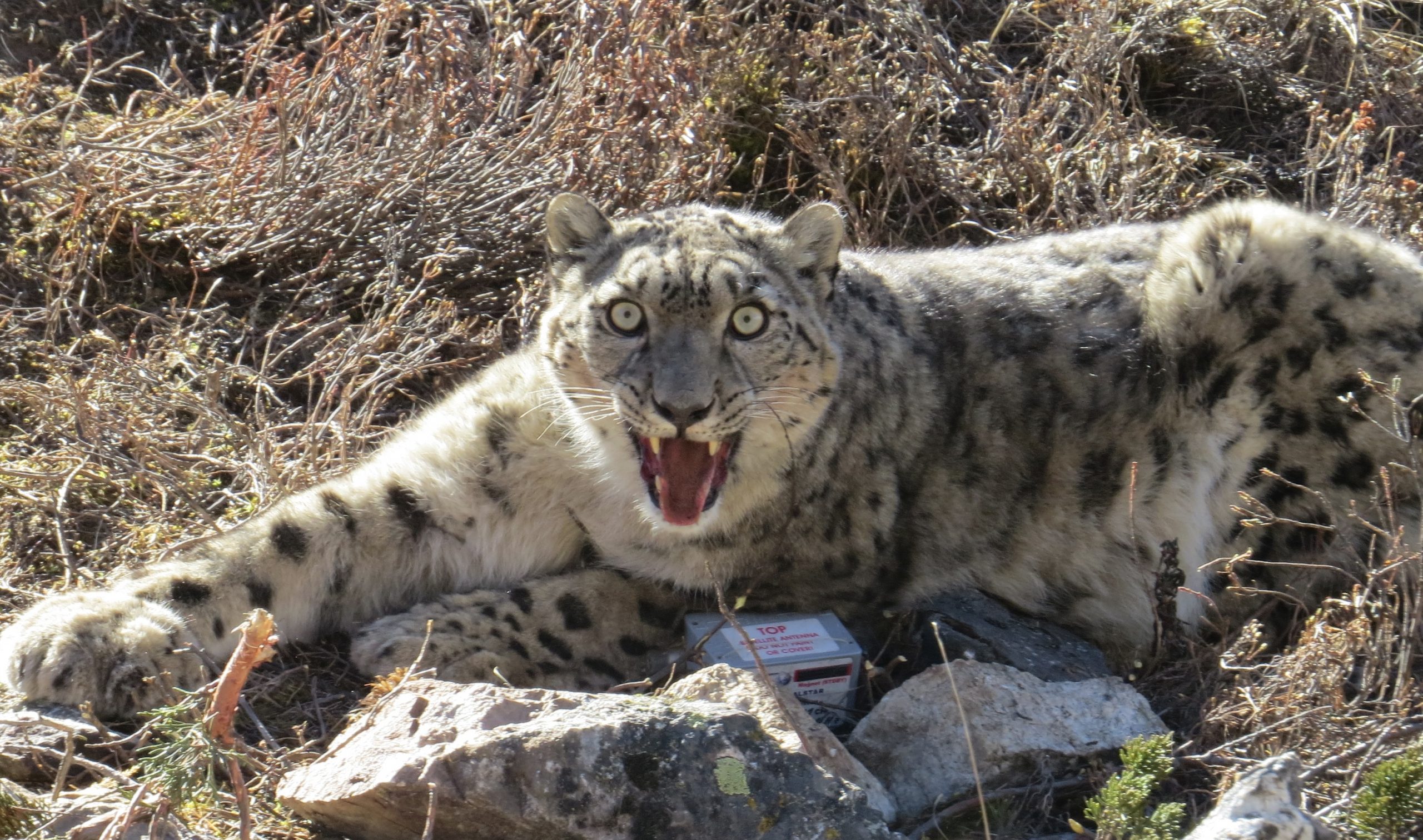
The second is advanced research technology. Nepal has used satellite GPS collars on snow leopards, first in Kangchenjunga and later in places such as Shey Phoksundo National Park. In the most recent reported expeditions, scientists fitted collars on adult males in Shey Phoksundo, bringing the number of collared snow leopards in Nepal to eight. The collars provide data on movement, habitat use and behaviour that would be impossible to collect any other way. They also help managers decide where corridors, grazing restrictions or patrols are most needed. These expeditions involved teams of around 30 people, including park staff, veterinarians, technicians and local citizen scientists.
The third is community involvement. Citizen scientists and snow leopard conservation committees help identify hotspots, monitor camera traps and report poaching. In several regions, local people are trained as trackers and guides, which gives them income from conservation and a personal stake in its success. Nepal’s wider conservation approach, which includes community forestry and conservation area management councils, has made this possible.
The fourth is policy. The government has made snow leopard population tracking and conservation a priority for 2024 to 2030, and a national conservation plan has been supported by international partners. The Snow Leopard Ecosystem Management Plan sets out how to protect habitats, manage conflict and respond to climate change. WWF Nepal’s end-of-year review for 2025 highlighted the new population estimate as a major milestone and said that human-wildlife conflict, climate stress and habitat pressure remain key challenges for 2026.
The fifth is care for people. In an acknowledgement that wildlife conflict has emotional as well as economic costs, WWF Nepal has begun piloting post-traumatic stress support systems in snow leopard landscapes where predation hits herding families hard. It is a small step, but it recognises that conservation works best when communities feel heard and supported.
Taken together, these efforts help explain why Nepal’s population looks relatively stable. They do not guarantee that it will stay that way, but they show that when science, government and local communities work together, outcomes can improve.
Seeing a Snow Leopard in Nepal
Many travellers dream of seeing a snow leopard, and Nepal is increasingly part of that conversation. It is important to start with honest expectations. Snow leopards are among the hardest large mammals to see in the wild anywhere. Even in the best places, sightings are never guaranteed.
Ladakh in northern India is widely regarded as the best place in the world for a snow leopard sighting, especially in Hemis National Park, which has some of the highest recorded densities. Specialist operators there offer winter trips with experienced trackers, and some quote high success rates. Nepal has real potential, and conservationists have said that snow leopard tourism could grow substantially. But one recent ranking of the world’s snow leopard hotspots noted that the infrastructure for snow leopard tourism in Nepal is still in its early stages.
If you want to try in Nepal, the main areas are Upper Dolpo and Shey Phoksundo, Upper Mustang, Manang and the Nar Phu valley, the Annapurna Conservation Area and Kangchenjunga. Nar Phu has been described by operators as particularly rich in snow leopard activity. Trek durations vary widely. Operator guides list trips of roughly 10 to 16 days for some routes and 18 to 25 days for Dolpo or Kangchenjunga. Several of these regions need restricted area permits, and national park or conservation area entry permits, which are normally arranged through licensed trekking agencies.
Costs vary by operator, season and group size. One company quotes roughly 1,800 to 3,200 US dollars for a Nepal trek focused on snow leopards, excluding international flights and personal gear. Treat any figure like that as a rough guide and compare several quotes. Ask each operator how they work with local communities, how they handle wildlife encounters and how much of your payment stays in the region.
Timing is a difficult question. In Ladakh, tracking is often best in winter and early spring, when deep snow pushes prey and predators to lower elevations. I could not find reliable best-season data for Nepal, and conditions differ between regions, so ask experienced local operators rather than assuming the same pattern applies. Winter trekking in the high Himalaya also brings real risks, including extreme cold, snow-blocked passes and altitude sickness, so choose experienced guides and plan carefully.
Responsible behaviour matters. Keep your distance from any animal you see, never try to approach or lure it, avoid flash photography and follow your guide’s instructions. Do not share the exact locations of dens or hotspots online, because that can attract disturbance or poachers. Stay on established trails, carry out your rubbish and respect local customs, especially in culturally important areas such as Dolpo.
Even if you do not see a snow leopard, the trip can be rewarding. You might find tracks in the snow, scrapes on a rock or a fresh kill, and you will almost certainly see blue sheep, birds of prey and spectacular mountain scenery. Many guides describe the search itself as part of the experience. Your spending also helps show communities that living snow leopards can be worth more than dead ones.
What You Can Do
You do not have to trek to the Himalaya to help. Supporting reputable conservation organisations that work in Nepal, including WWF Nepal, the National Trust for Nature Conservation, the Snow Leopard Trust and Wildlife Conservation Nepal, is one of the most direct options. Look for groups that publish clear reports, involve local communities and are transparent about how funds are used.
If you travel, choose operators that employ local guides, support conservation committees and follow wildlife viewing guidelines. Avoid buying products made from wildlife, and report suspected illegal trade to the authorities. Share accurate information about snow leopards rather than myths, and be wary of images or videos that suggest close, easy encounters, which can encourage unsafe behaviour.
Most importantly, remember that the animals and the people who live alongside them are part of the same story. Conservation that ignores herders and villagers will not last, and conservation that works with them can.
The Road Ahead
The numbers tell one story. Around 400 snow leopards live in Nepal, in a small, high and fragile habitat, and that population appears to be relatively stable. Behind the numbers is a more complicated picture. Climate change is changing the mountains faster than conservation plans can respond. Herders still lose animals, and some still lose patience. Roads, dams and other infrastructure are creeping into places that were once untouched. Poaching has not gone away.
But there is also reason for hope. Nepal now has a baseline it can build on. It has a growing body of research, a network of community conservation groups, insurance and compensation tools, and a population of people who, in many places, still see the snow leopard as something to be respected rather than feared. The country’s experience is being studied and copied elsewhere.
The next decade will test whether that hope is justified. If Nepal can keep prey populations healthy, support the people who share the mountains, protect habitat corridors and adapt to a warming climate, the ghost of the Himalayas may continue to haunt its high ridges for generations to come. If it cannot, the loss will be felt far beyond Nepal. Either way, the snow leopard reminds us that some of the most important conservation stories happen in places where very few people will ever stand.
Sources and Further Reading
This article draws on reporting and research from AFP, WWF and WWF Nepal, the National Trust for Nature Conservation, Nepal’s Department of National Parks and Wildlife Conservation, the Kathmandu Post, The Himalayan Times, Nepali Times, Mongabay, the Snow Leopard Network and Trust, Wildlife Conservation Nepal, the journal paper by Aryal and colleagues on snow leopard and blue sheep distributions under climate change, and the chapter on snow leopard-human conflict in Nepal’s conservation areas. Figures were current as of October 2026. Check the original sources for the latest updates.