Travel & Wildlife
Jeep Safari in Nepal: The Complete Guide to Chitwan, Bardia and Beyond
Himal Shahi Thakuri · Oct 26, 2026 · 19 min read
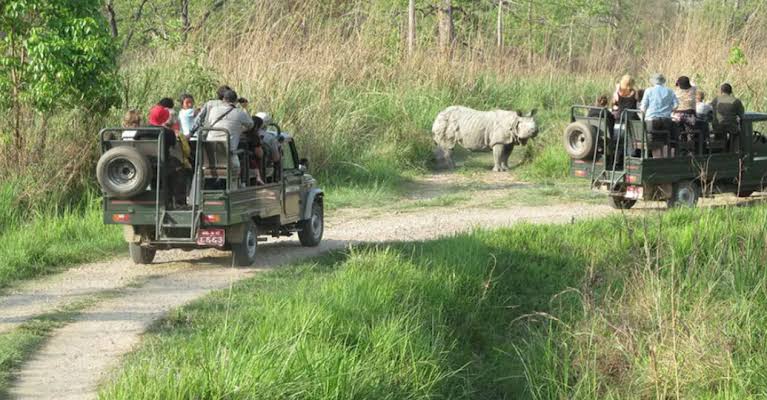
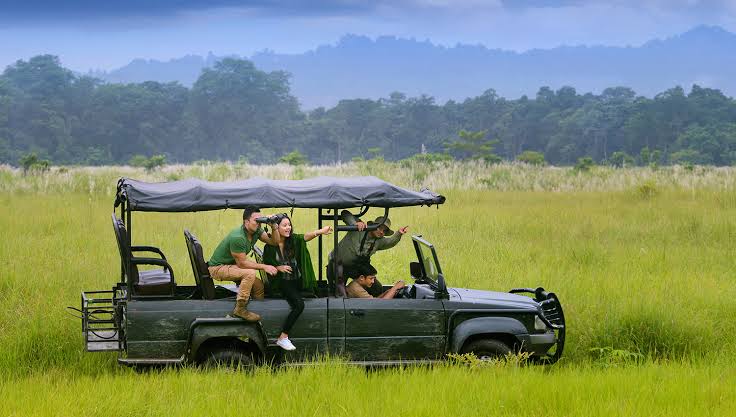
A jeep safari in Nepal is the simplest way to get deep into the wild lowlands of the Terai, where one-horned rhinos graze in tall grass, tigers move through the sal forest and gharial crocodiles bask on riverbanks. You sit in an open four-wheel-drive vehicle with a trained guide, bounce along forest tracks and scan the trees and grassland for movement. Nobody can promise what you will see, and that uncertainty is a big part of the thrill.
Nepal has become one of the more encouraging places in Asia to look for big wildlife. The latest national tiger census, announced in July 2026, counted 429 tigers, up from 355 in 2022 and only about 121 in 2010. The country’s rhino population has climbed from under 100 in the 1960s to 752 in the last full count in 2021. Those numbers are the reason a safari here can feel so rewarding: the animals are really there, and they are recovering.
This guide explains how a jeep safari in Nepal works, which parks to choose, what the 2026 fees look like, when to go and what to expect on the day. It also covers the rules, the safety basics and the ethical questions around wildlife tourism. The details come from park authorities, news reports from 2025 and 2026, conservation sources and tour operators, with sources listed at the end. Prices and rules change, so confirm them before you travel.
What Is a Jeep Safari in Nepal?
A jeep safari is a guided wildlife drive inside a national park or protected forest in an open, high-clearance vehicle. In Nepal, these safaris take place mainly in the southern lowlands known as the Terai, in places like Chitwan National Park, Bardia National Park and Shuklaphanta National Park.
You usually travel with a naturalist guide and a driver. In Chitwan, each jeep can carry up to 10 people, and the park licenses a fixed fleet of vehicles. Safaris typically run in the morning or afternoon, when animals are most active. A half-day safari lasts about four hours, and a full-day safari lasts about seven to eight hours, often with a picnic lunch or a visit to a Tharu village.
The jeep is not the only way to see these parks. Many visitors combine it with a guided jungle walk, a canoe ride on a river, birdwatching and a visit to local Tharu communities. Each has its own pace. The jeep’s advantage is distance. In one day it can cover far more ground than a walking group, so you reach remote grasslands, riverbanks and waterholes that you would not reach on foot.
Chitwan National Park: Nepal’s Classic Safari
Chitwan National Park is where most people have their first jeep safari in Nepal. It was the country’s first national park, it is a UNESCO World Heritage Site and it lies in the Inner Terai, about 162 kilometres from Kathmandu. The park’s own brochure gives its area as 952.63 square kilometres, though some sources still quote the older figure of 932. Sal forest covers a large part of it, and the rest is a mix of grassland, riverine forest and floodplain.
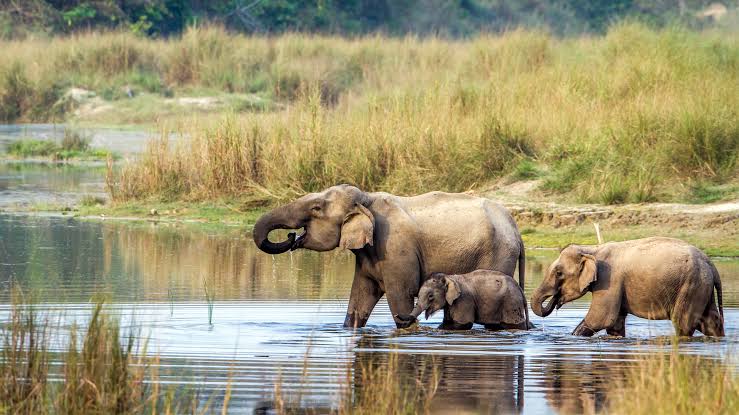
The wildlife is the main draw. Chitwan is home to the largest population of greater one-horned rhinos in Nepal, with 694 recorded in the 2021 national count. It also has Bengal tigers, Asian elephants, gharial and marsh mugger crocodiles, several species of deer, wild boar, monkeys, bears and hundreds of species of birds. The 2026 tiger census counted 145 tigers in Chitwan, up from 128 in 2022, which is the largest number in any Nepali park.
Chitwan is also the busiest park for visitors. In the 2025/26 fiscal year it received 272,923 visitors, including 161,375 Nepalis, 22,883 tourists from SAARC countries and 88,665 from other countries. Sauraha is the most popular entry point: one report counted 195,174 tourists entering through Sauraha in the first nine months of the fiscal year alone.
Jeeps enter the park from several gateways. As of October 2026, there are 74 licensed jeeps in the park fleet: 32 operating from Sauraha, 22 from Kasara, 11 from Meghauli, eight from Amaltari and one from Madi. Where you stay often decides which gateway you use. Sauraha is the best-known tourist base, Kasara is the park headquarters, and Meghauli and Amaltari are quieter and more remote.
Different operators offer different routes. One lodge describes three route options that its naturalists choose based on recent sightings and animal movement, covering more than 30 kilometres through grassland, riverine and sal forest, starting with a short boat crossing and entry at the Bhimle post. Routes change through the season depending on conditions, so ask your guide what is likely to work on the day.
Bardia National Park: The Wilder Alternative
If Chitwan is the classic, Bardia (also spelled Bardiya) is the wilder one. It lies in western Nepal, about 580 kilometres from Kathmandu. It was established in 1988, covers about 968 square kilometres and is the largest and least disturbed protected area in the Terai. Because it gets far fewer visitors than Chitwan, the atmosphere is quieter and the tracks feel emptier.
Bardia is often named as one of the best places in Nepal to look for tigers. The 2026 census counted 112 tigers in Bardiya, a decline from 125 in 2022 and the only major park where numbers fell. Conservationists will be watching to see whether that is a real downward trend or normal variation, so treat it as a reason to support the park rather than a reason to avoid it. Bardia also has rhinos, with 38 counted in 2021, plus wild elephants, swamp deer, leopards, Gangetic dolphins in the Karnali river and a long list of birds.
Most lodges are in Thakurdwara, the village next to the park entrance. Jeep safaris, jungle walks, river safaris and birdwatching are the main activities, and full-day safaris with a picnic lunch let you go deep into the park. Operators say that the best season is October to April, with April and May being hot but good for tiger sightings because animals gather around the remaining water.
Getting there takes more effort than Chitwan. Tourist buses from Kathmandu or Pokhara take roughly 18 to 20 hours, while flying from Kathmandu to Nepalgunj and then driving takes much less time, with a drive of about one to two hours or a little more to the park. For many travellers the journey is part of the appeal, and for others it is a good reason to fly.
Shuklaphanta National Park: Grasslands and Swamp Deer
Far in the west, near the Indian border, Shuklaphanta National Park offers a different kind of jeep safari in Nepal. Its signature habitat is a vast open grassland, among the largest in the country, and its signature animal is the swamp deer or barasingha. The park has the largest population of swamp deer in Nepal, and herds are often visible out in the open, which makes for a very different experience from the dense forest of Chitwan.
Shuklaphanta also holds tigers, elephants, leopards and crocodiles, plus more than 450 bird species. The 2026 census recorded 50 tigers there, up from 36 in 2022, and the rhino population there was 17 in the 2021 count. Rani Tal is a good spot for birdwatching, and watchtowers give wide views over the grassland.
It is one of the least crowded parks. A visitor who took a four-hour jeep safari in April 2025, from 7:30 to 11:30 in the morning, reported seeing spotted deer, hog deer and several swamp deer. The park is about 15 kilometres from the town of Mahendranagar, and you can reach the region by flying from Kathmandu to Dhangadhi and driving on. Operators suggest that winter, from December to February, is a comfortable time for jeep safaris and birdwatching.
Parsa and Koshi Tappu: Two More Options
Two other protected areas are worth knowing about. Parsa National Park, which adjoins Chitwan to the east, has seen the biggest jump in tiger numbers of any park, from 41 in 2022 to 71 in 2026. It is much less visited than Chitwan, so it suits travellers who want a quieter experience and are comfortable with fewer facilities.
Koshi Tappu, in the east, is best known for birds rather than big mammals. It sits along the Koshi river and its wetlands attract large numbers of migratory waterbirds. Jeep safaris and birdwatching sessions are offered there, and it is a natural add-on for bird lovers who are already visiting Chitwan. Banke National Park, in the west, also recorded 51 tigers in the 2026 census, though it is much less developed for tourism.
What You Might See: Tigers, Rhinos and More
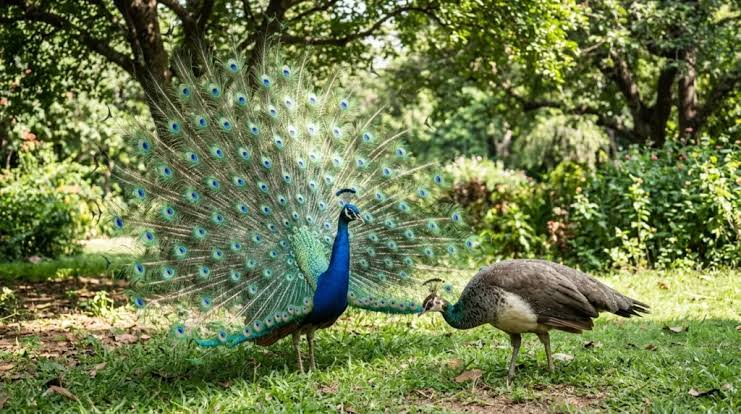
On a typical jeep safari in Nepal, the animals you are most likely to see are deer, rhinos, monkeys and birds. Spotted deer, hog deer and sambar are common. Wild boar and langurs and rhesus macaques are frequent sights. Rhinos are the star attraction in Chitwan, and many visitors see at least one, often wading in a river or grazing in tall grass. Crocodiles and gharial can be seen from riverbanks, and peafowl, hornbills, kingfishers and many other birds are regularly spotted.
Tigers are the real prize and the hardest to see. Nepal has 429 tigers, but they live in large areas of forest and are secretive. Bardia and Chitwan are the usual first choices, and operators often say that tiger sightings are more common in Bardia, although there is no guarantee anywhere. Treat a tiger as a bonus. If you go in with realistic expectations, with a view of rhinos, deer and birds as a success, a tiger sighting becomes a thrilling surprise instead of a disappointment.
Here is a quick look at the numbers behind these parks, so you know what you are looking for:
The 2026 tiger census counted 145 tigers in Chitwan, 112 in Bardiya, 71 in Parsa, 51 in Banke and 50 in Shuklaphanta, a total of 429. The 2021 rhino count found 694 rhinos in Chitwan, 38 in Bardia, 17 in Shuklaphanta and three in Parsa. A Himalayan Times report says the five-yearly rhino census due this year was suspended because of a funding shortage, so the 2021 figures remain the latest official count, but please check for any newer announcement before quoting them.
Fees and Costs in 2026
Costs for a jeep safari in Nepal have two parts: the government fees and the price charged by the tour operator or lodge.
The official park fees at Chitwan, as set out in the park’s own rules and recent news reports, are NPR 2,000 per person for foreign tourists, NPR 1,000 for SAARC nationals and NPR 150 for Nepalis. On top of this, a jeep entering the park is charged NPR 5,000. The park says that a share of entry fees goes to buffer-zone communities, and its brochure puts it at 30 to 50 percent. Other parks have their own fee schedules. One operator lists Bardia at NPR 1,500 per person per day for foreigners, but I could not confirm this from an official source, so check at the gate or with the park office.
Operator prices vary a lot. Some examples from listings:
A shared half-day jeep safari of about four hours from Sauraha is listed at roughly US$90 to $95 per person, with hotel pickup and a guide. A full-day jeep safari of about eight hours is listed at around US$285 to $320 per adult on a major booking platform, with lower per-person prices for larger groups. One trekking agency lists a standard two-night, three-day Chitwan package at US$275 per person, including permits, a naturalist, a jungle walk, a Tharu village visit and either a jeep or elephant safari. Luxury lodges charge much more, and their published price tables go well above US$600 per person for small groups on a full-day jeep safari.
Treat all of these as examples, not quotes. Ask what is included, whether park entry and the jeep fee are covered, whether the jeep is shared or private, how long you will be inside the park, and whether the guide is a licensed naturalist.
When to Go: Seasons and the Monsoon Closure
The most important thing to know about timing is that jeep safaris inside Chitwan close for the monsoon. Every year, the park suspends commercial jeep safaris inside the park from around July 1 because rain floods streams, damages unpaved forest tracks and brings down trees, and because the monsoon is a critical breeding season for wildlife and birds. In 2026, the park suspended jeep safaris on July 1 and reopened them on October 9, after roads were repaired and fallen trees cleared. The reopening was delayed by floods in the last week of September.
During the closure, jeep and elephant safaris continue in the buffer zone and community forests, and jungle walks continue even in the monsoon months. So you can still see wildlife in monsoon, but the experience is different from a drive inside the park.
For the main park season, the post-monsoon months have the best conditions. Operators describe October to March as the best period for Chitwan, with pleasant weather and good sightings, and October to April for Bardia. April and May are hot, but animals gather around waterholes, which can make tigers easier to find. Bardia operators often recommend March to May for tiger sightings, while other sources say October to March is best for wildlife overall, so there is a trade-off between comfort and tiger odds.
Winter mornings can be cold and foggy, so dress in layers. Visibility can also depend on the grass height, which is usually tallest soon after the rains and shorter later in the dry season. Check with your lodge about conditions closer to your dates.
How a Typical Safari Day Works
A jeep safari day in Chitwan usually begins early. Your hotel or lodge picks you up in Sauraha or another base, and you drive to the park entrance, where tickets are checked and the guide gives a safety briefing. Then the jeep enters the park, following one of the established routes. A typical safari includes stops for birdwatching, a rest at a river or watchtower, and sometimes a picnic lunch if you are on a full-day trip. Some operators combine the jeep with a boat ride on the Rapti River in the late afternoon.
Morning and afternoon sessions both work. Animals are generally more active in the cooler parts of the day, and lighting is better for photography. If you can only do one safari, the morning is often the safest choice.
Park rules matter. Chitwan’s regulations say that flora and fauna are fully protected and must not be disturbed, that visitors must put trash in bins, that illegal animal or plant products must not be bought, and that walking within the park between sunset and sunrise is strictly prohibited. The park also asks visitors not to use plastic and to carry out non-biodegradable items. Community forest safaris in the buffer zone have their own conditions. In one example near Kasara, jeeps were allowed only 24 trips a day, 12 in the morning and 12 in the evening, with no noise and no littering and a maximum of 10 people per jeep.
Evening Safaris and the Ethics Debate
A new question hit the headlines in mid-2026: whether to allow evening jeep safaris in community forests around Chitwan. The park office had closed jeep safaris inside the park for the monsoon, while officials discussed preparing evening safaris in three community forests outside the park. The idea drew criticism from animal-rights advocates and conservationists, who worried about noise, disturbance and wildlife moving into human settlements. One guide suggested that if evening safaris go ahead, they should at least use electric vehicles that do not make noise and limit the number of jeeps. I did not find a final decision, so check the current situation if this matters to your plans.
The same ethical thinking applies to every safari. Elephant-back safaris have been reduced or phased out for animal-welfare reasons in many places. Operators now say elephant safaris are limited, and a recent report notes that elephant safaris are not operated inside Chitwan National Park, only in the buffer zone and community forests. Many travellers choose jeep or walking safaris instead. If you do consider an elephant ride, ask about how the animals are treated and think about whether you are comfortable with it.
You can reduce your own impact in simple ways. Choose small groups. Keep your voice low. Never ask the driver to chase or crowd an animal. Do not feed wildlife or throw anything from the jeep. Do not demand to be taken closer for a better photograph. The best operators are the ones who will turn the jeep away from an animal that is stressed.
Safety on a Jeep Safari
Safaris in Nepal’s parks are generally well organised, but these are wild animals and you should take the risks seriously. Rhinos, elephants and tigers can be dangerous, and incidents do happen. As tiger numbers rise, experts have noted growing concerns about human-tiger conflict outside parks, which is a reminder that these animals share a crowded landscape.
A few common-sense rules help. Stay seated in the jeep and keep your arms and legs inside. Follow your guide’s instructions, and do not leave the vehicle unless the guide says it is safe. Stay quiet near animals. Do not stand up or lean out to take photographs, and never approach a rhino, elephant or tiger on foot. Keep a safe distance if a rhino is near the track, because rhinos can charge when startled. If you join a jungle walk, listen to the guide carefully, because walking safaris carry more risk than jeeps.
Beyond wildlife, dust, heat, cold mornings and rough tracks are the most common discomforts. Bring water, sun protection and a light jacket, and ask your lodge about any health precautions, such as insect repellent.
Getting There
Chitwan is the easiest park to reach. It is about 162 kilometres from Kathmandu, and tourist buses and private cars take you to Sauraha, the main base. Chitwan is also linked with Kathmandu by air through a nearby airport. For Bardia, take a long bus ride of roughly 18 to 20 hours from Kathmandu or Pokhara, or fly to Nepalgunj and drive on. For Shuklaphanta, fly to Dhangadhi and drive. For Koshi Tappu, fly to Biratnagar and drive on.
Plan your route so that you do not waste days on the road. A common itinerary pairs Chitwan with Pokhara or Kathmandu, while longer trips link Chitwan, Bardia and Koshi Tappu for a wider view of the Terai.
Practical Tips for Your Trip
Book early in peak season, especially around October to November, when Nepali and foreign visitors flood the park. During the Dashain holidays in one recent year, more than 20,000 tourists visited Chitwan in a few days.
Ask your lodge which gateway they use and how many jeeps will be on your route. A quieter gateway can mean a more peaceful safari.
Bring binoculars. Much of what you will see is birds and distant animals, and binoculars make the experience richer.
Wear muted colours such as green, brown and khaki, and avoid bright clothing and strong perfumes.
Keep your camera ready but be patient. Telephoto lenses help, and flash should not be used on wildlife.
Combine the jeep with a walk and a canoe ride if you have time, because each shows a different side of the park.
Respect local communities. The Tharu people, who have lived in the Terai for generations, run many homestays and cultural programmes. Spending money with local guides, lodges and homestays helps make wildlife worth more alive than dead.
Common Questions
How much does a jeep safari in Nepal cost? Park fees at Chitwan are NPR 2,000 for foreigners, NPR 1,000 for SAARC nationals and NPR 150 for Nepalis, plus NPR 5,000 per jeep. Operator packages range from about US$90 for a shared half-day to several hundred dollars for a full day or a luxury trip.
Where is the best place for a jeep safari in Nepal? Chitwan is the most accessible and best for rhinos. Bardia is quieter and often chosen for tigers. Shuklaphanta suits travellers who want open grassland and swamp deer. Koshi Tappu is best for birds.
When can you do a jeep safari in Chitwan? Jeep safaris inside Chitwan National Park are suspended for the monsoon, usually from July 1, and they reopened on October 9 in 2026. The main season runs through the cooler months.
Will I see a tiger? Maybe, but it is far from guaranteed. Nepal has 429 tigers, but they are secretive. Rhinos, deer and birds are much more likely.
Can children go on a jeep safari? Many families do, but check the operator’s policy and keep children seated and quiet. I did not find an official age limit in my research.
Are elephant safaris still available? Elephant safaris are described as limited, and one recent report says they are not operated inside Chitwan National Park, only in buffer zones and community forests. Many travellers now prefer jeep or walking safaris.
Is a guide required? Yes, jeeps carry a guide and driver, and guides are strongly recommended for jungle walks.
Closing Thoughts
A jeep safari in Nepal is more than a way to tick off animals. It is a chance to see one of conservation’s most hopeful stories at close range. Rhinos that were nearly wiped out in the 1960s now graze along the Rapti river. Tigers have tripled in number since 2010. Whole grasslands in the west are full of swamp deer. These recoveries took decades of patrol work, community cooperation and political will, and they are not guaranteed to last.
You are part of that story when you visit. Your park fees help pay for rangers and buffer zone programmes, and your choices as a traveller can encourage quieter, slower and kinder tourism. Pick operators who put wildlife first. Keep your distance. Take only photos and leave nothing behind.
The best safaris are often the ones where nothing dramatic happens: a rhino stepping out of the mist, a peacock calling at dawn, a kingfisher flashing over a river. If you also catch the stripe of a tiger in the grass, consider it a gift.
Sources and Further Reading
This article draws on the Chitwan National Park’s published rules and regulations, the Department of National Parks and Wildlife Conservation’s Chitwan brochure, reports from Onlinekhabar, The Himalayan Times, Khabarhub, Nepal Press, Republica, Ekantipur and Nepal Traveller on 2025 and 2026 park fees, visitor numbers, the monsoon closure and the October 2026 reopening of jeep safaris, reports from AFP, EFE and the Kathmandu Post on the 2022 and 2026 tiger censuses, WWF and NTNC reports on the 2021 national rhino count, operator information from Barahi, Marron Treks, Asian Hiking Team and others on prices and itineraries, and travel and park descriptions of Bardia, Shuklaphanta and Koshi Tappu. Please verify fees, closures and rules with the park office or a licensed operator before you travel, because they change.