Festivals
Tihar: Nepal’s Festival of Lights, Animals and Brotherly Love
Himal Shahi Thakuri · Oct 25, 2026 · 6 min read
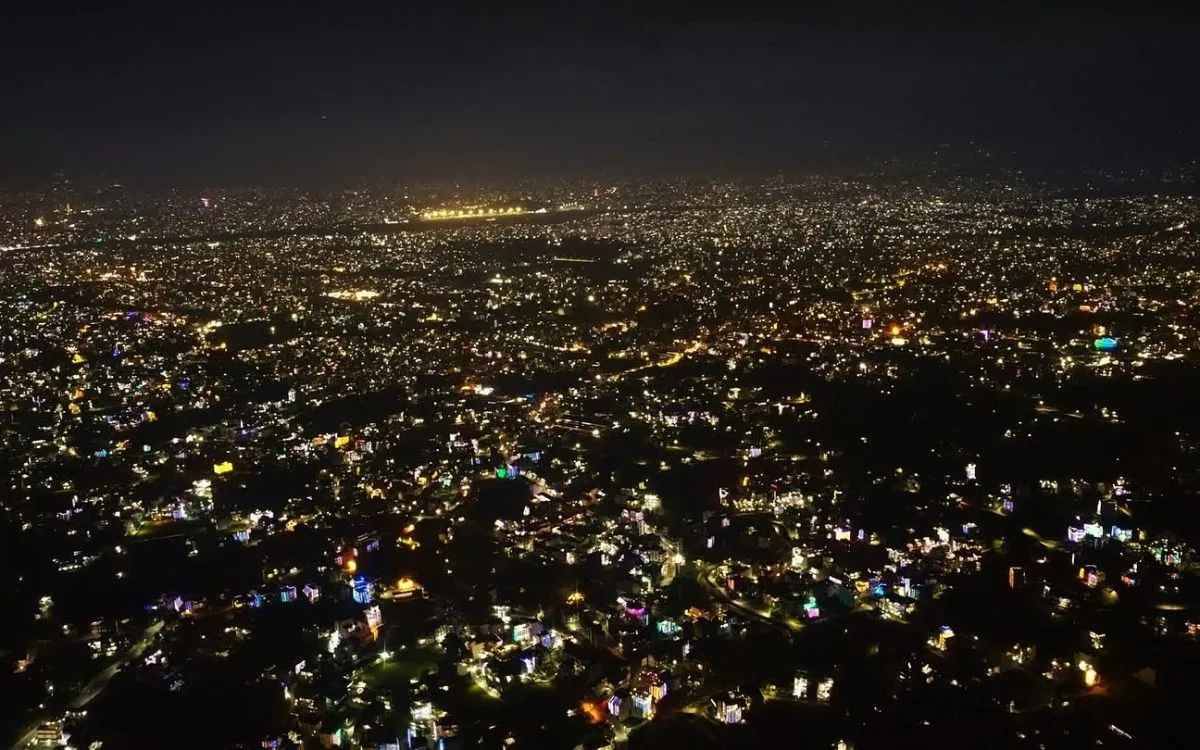
A few weeks after Dashain, when the autumn air turns cool and the evenings come early, Nepal lights up again. Rows of oil lamps glow on windowsills, colorful patterns decorate doorsteps and the smell of marigolds and sweets fills the streets. This is Tihar, the festival of lights, a five-day celebration that honors animals, wealth, family and the bond between brothers and sisters.
What Is Tihar?
Tihar, also known as Deepawali or Yamapanchak, is one of the most loved festivals in Nepal. It is celebrated for five days in the Nepali month of Kartik (usually October or November), shortly after Dashain. Where Dashain is serious and ritual-heavy, Tihar feels joyful and bright, with lights, music, color and children going door to door.
Tihar is similar to Diwali in India, but it has its own unique character. Few festivals in the world give so much attention to animals, and none has quite the same tradition of worshipping crows, dogs and cows on separate days.
The Meaning Behind Tihar
Tihar is a festival of gratitude. It thanks the animals that live alongside humans, honors Laxmi, the goddess of wealth and prosperity, and celebrates the love between siblings. Lamps are lit to drive away darkness, and the festival carries the message that light, kindness and togetherness always win.
The festival is also linked to Yama, the god of death. According to tradition, a sister’s prayers and tika can protect her brother from Yama, which is why the final day is so meaningful.
The Five Days of Tihar
Each day has its own ritual and meaning.
Day 1: Kaag Tihar (Worship of the Crow)
Tihar begins by honoring the crow. In Hindu belief the crow is a messenger, and its cawing is linked with sorrow and death. People place offerings of rice, sweets and grains on rooftops and in courtyards, asking that no sad news come to the family in the year ahead.
Day 2: Kukur Tihar (Worship of the Dog)
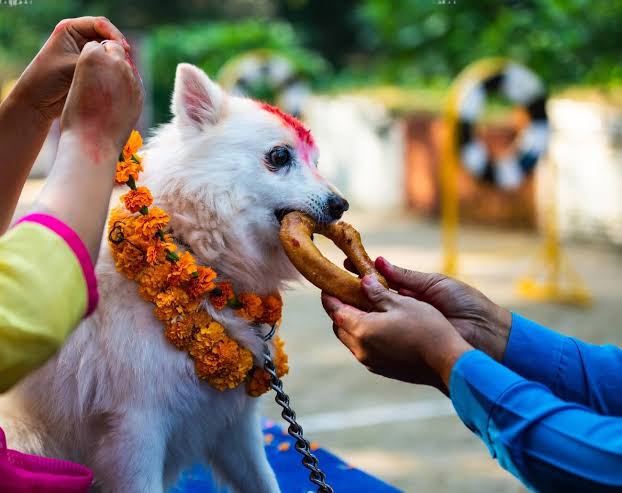
On the second day, dogs are honored for their loyalty. They are linked with the god Bhairav and are believed to guard the gates of the afterlife. Families place a red tika on the dog’s forehead, hang a marigold garland around its neck and offer a special meal. Street dogs and pets alike receive treats and affection. This day has become widely admired around the world and often goes viral online.
Day 3: Gai Tihar and Laxmi Puja (Cow and Goddess of Wealth)
In the morning, the cow is worshipped. It is sacred in Hinduism and seen as a symbol of Laxmi, the giver of prosperity. Cows are garlanded, fed and honored with tika.
In the evening comes the most dazzling part of Tihar. Homes are cleaned, doorsteps are decorated with colorful rangoli and the path to the house is lit with lamps. Families believe the goddess Laxmi enters houses that are clean and bright. Prayers are offered at night, and the whole country glows with oil lamps, candles and electric lights.
Day 4: Govardhan Puja and Mha Puja
On the fourth day, many Hindu families worship the ox and Govardhan, a sacred hill linked to Lord Krishna, in some regions making cow dung mounds as a symbol of the hill.
Among the Newar community, the same day is Mha Puja, the “worship of the self”. People honor their own body and soul by drawing a mandala and offering prayers. It also marks the start of the Nepal Sambat, the Newar new year, which makes it a special celebration in Kathmandu Valley.
Day 5: Bhai Tika (Brother’s Day)
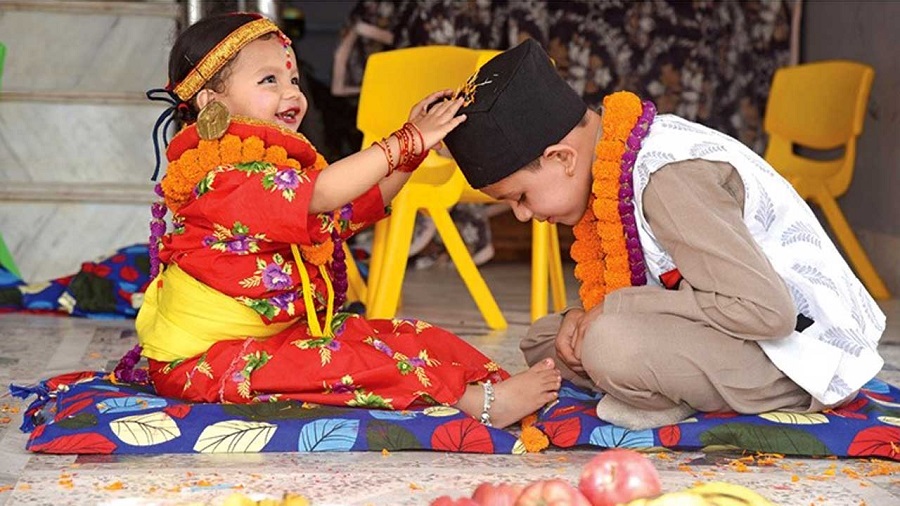
The final day is the emotional heart of Tihar. Sisters prepare a special tika and place it on their brothers’ foreheads. A line of oil is drawn in a circle around the brother, and the tika is made of seven colors. He is also given a garland of the makhamali flower, a deep-colored, long-lasting flower believed to symbolize a long life. Sisters pray for their brothers’ health, success and protection from harm.
In return, brothers give their sisters gifts, money or clothing and promise to support and protect them. Cousins and relatives join in, and families who live far apart often travel home for this day. Many sisters and brothers who cannot meet exchange blessings by phone or video call.
Deusi and Bhailo: Songs Door to Door
One of the happiest parts of Tihar is the singing. Groups of young people go from house to house singing and dancing in two traditions called Deusi and Bhailo.
Bhailo is traditionally performed by girls and women on the evenings of Laxmi Puja and the days before it. Deusi is traditionally performed by boys and men on the evenings after Laxmi Puja.
Residents welcome the groups with money, rice and treats. These songs spread good wishes and blessings, and in recent years many groups have used the money to support charity and community projects.
Lights, Colors and Decorations
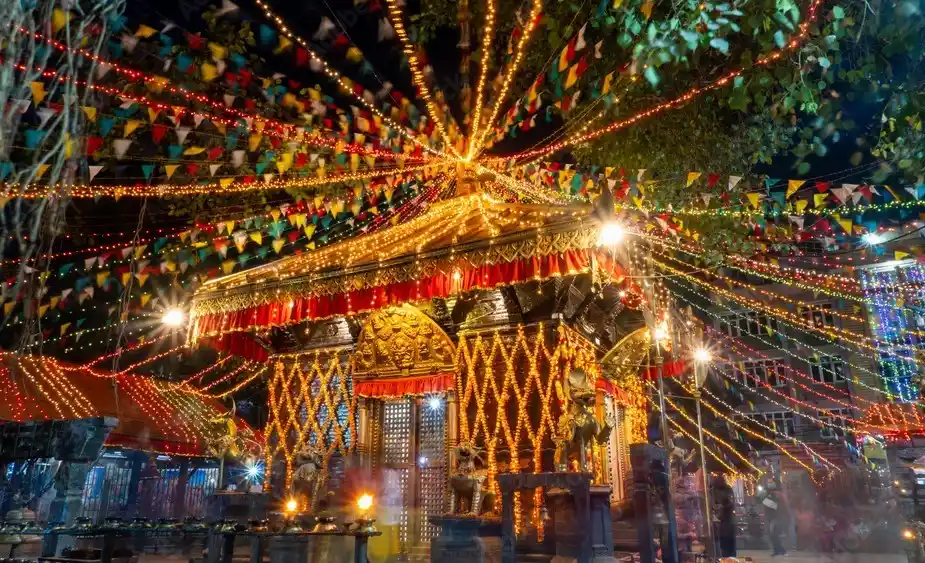
Tihar is a visual festival. Homes are decorated with lamps, candles and strings of electric lights. Doorsteps are painted with rangoli patterns in red, yellow, green and white, with motifs such as lotus flowers, footprints of Laxmi and geometric shapes. Marigold and globe amaranth garlands hang from doors and windows. Even small shops and street stalls glow at night, and the cities take on a magical look.
Tihar Food and Sweets
Tihar is a feast of sweets and snacks. Popular items include:
Sel roti: A ring-shaped, slightly sweet rice bread. Anarsa: A sweet rice-flour treat coated in sesame seeds. Laddu and barfi: Traditional sweets shared with guests. Fruit, nuts and dried fruits: Offered to guests and relatives. Bara and local snacks: Common in Newar households.
Visitors are welcomed with a plate of sweets and fruit in nearly every home during Tihar.
Safety and Caring During Tihar
Tihar is also a time to be thoughtful. Lamps, candles and firecrackers can cause burns and fires, so children need supervision. Loud crackers can frighten animals, and many people now choose quieter, eco-friendly decorations such as oil lamps, flowers and LED lights. Since Tihar is so focused on animals, many families treat their pets and stray animals with extra care.
Tihar Around the World
Nepali communities abroad celebrate Tihar in the United Kingdom, the United States, Australia, Japan and the Gulf countries. Temples, community halls and homes host Laxmi Puja, Deusi-Bhailo performances and Bhai Tika programs, helping children born abroad stay connected to their roots.
Tips for Visitors During Tihar
Tihar is a wonderful time to visit Nepal. Kathmandu, Patan and Bhaktapur are especially beautiful at night. Book hotels and transport early, since many Nepalis travel during the holiday, and expect some shops and offices to be closed on the main days. Be respectful during rituals, ask before photographing families and always accept sweets with thanks if you are invited to a home. If you hear Deusi-Bhailo singers at your door, a small donation is welcome.
Why Tihar Matters
Tihar teaches gratitude for animals, respect for prosperity, love between siblings and the belief that a single small light can brighten the darkest night. It reminds Nepalis, whether at home or abroad, that family and kindness are the greatest wealth.